
ghk-cu-100mg-by-ozpharm
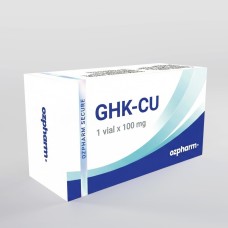
- Brand: Ozpharm
- Product Code: Ozph013
- Reward Points: 45
- Availability: In Stock
- Warehouse US Domestic 2
- $45.00
- Ex Tax: $45.00
- Price in reward points: 450
Tags: GHK-Cu 100mg by Ozpharm, Ozph013, Anti-aging, Wound Healing
GHK-Cu 100 mg – Ozpharm | Copper Peptide Research Compound
Introduction
GHK-Cu 100 mg, manufactured by Ozpharm, contains GHK-Cu (glycyl-L-histidyl-L-lysine copper complex), a naturally occurring copper-binding tripeptide that has been investigated extensively in cellular, skin and tissue-repair research.
GHK-Cu has attracted scientific interest because of its potential involvement in processes associated with extracellular-matrix remodeling, collagen production, skin biology, inflammation and tissue repair. Much of the evidence comes from laboratory, animal and topical studies, while clinical evidence in humans remains limited.
Product Details
Product Name: GHK-Cu 100 mg
Manufacturer: Ozpharm
Active Compound: GHK-Cu (Copper Tripeptide)
Strength: 100 mg
Compound Type: Copper-binding tripeptide
Research Areas: Skin biology, tissue repair, extracellular-matrix research and regenerative biology
Primary Research Interest: Collagen and extracellular-matrix pathways
Status: Experimental / research compound
Approved Medical Use: No established approved systemic indication
Benefits and Research Properties
The following represent research areas and potential biological properties, rather than guaranteed clinical benefits.
Supports Research into Collagen Production
GHK-Cu has been studied for its relationship with collagen and extracellular-matrix biology. Copper itself is involved in enzymes associated with connective-tissue formation, while GHK-Cu has been investigated for effects on tissue-remodeling pathways.
Skin Regeneration Research
Preclinical and topical research has examined GHK-Cu in relation to skin structure, elasticity, texture and repair processes. However, controlled human evidence remains limited and inconsistent.
Tissue Repair Research
GHK-Cu has been investigated for its potential role in processes associated with tissue repair, including extracellular-matrix remodeling, angiogenesis and inflammatory signaling.
Anti-Aging Skin Research
GHK-Cu is widely researched and used in topical cosmetic formulations because of interest in its potential effects on wrinkles, skin firmness and overall skin appearance. Human evidence remains relatively limited, so these properties should not be presented as guaranteed anti-aging effects.
Hair and Scalp Research
GHK-related peptides have also been investigated in connection with hair and follicular biology. However, evidence supporting systemic or injectable GHK-Cu for hair growth is currently insufficient.
How Does GHK-Cu Work?
GHK-Cu is a complex formed when the tripeptide glycyl-L-histidyl-L-lysine (GHK) binds copper.
Research suggests that GHK-Cu may interact with biological pathways involved in:
Extracellular-matrix remodeling
Collagen-related processes
Tissue repair
Angiogenesis
Inflammatory signaling
Cellular protection
Skin regeneration
These mechanisms are biologically plausible and supported primarily by preclinical research. They should not be interpreted as proof of therapeutic effectiveness in humans.
Common Research Combinations
There is no clinically established combination protocol for GHK-Cu 100 mg.
In research settings, GHK-Cu may be investigated alongside pathways or technologies related to:
Collagen and extracellular-matrix biology
Skin regeneration
Wound-healing mechanisms
Tissue engineering
Biomaterial research
Cellular signaling
Regenerative medicine
GHK-Cu should not be promoted as a clinically proven combination therapy with other peptides, growth factors, anabolic compounds or prescription medicines.
Cycle and Research Protocol
There is no standardized, clinically validated GHK-Cu cycle for human use.
The 100 mg quantity identifies the amount of compound contained in the product and should not automatically be interpreted as a recommended human dose.
Published evidence varies considerably according to the formulation and route of administration. Research involving topical GHK-Cu cannot be used to establish an appropriate injectable dose or cycle. In particular, controlled human evidence for injectable GHK-Cu is currently inadequate.
For legitimate laboratory research, experimental protocols should be established by qualified researchers according to the applicable scientific, institutional and regulatory requirements.
Possible Side Effects and Safety Considerations
The complete safety profile of GHK-Cu has not been established for systemic or injectable use.
Potential safety considerations include:
Local irritation
Skin sensitivity
Allergic or hypersensitivity reactions
Unknown systemic effects
Potential effects related to copper exposure
Possible interactions with other compounds
Unknown long-term effects
Concerns regarding product purity and identity
Sterility concerns for injectable preparations
Topical formulations have generally been the better-studied route, whereas injectable GHK-Cu has substantially less human safety evidence.
GHK-Cu and Skin Research
GHK-Cu is particularly well known for its use in cosmetic and dermatological research.
Research has investigated its potential relationship with:
Collagen formation
Skin elasticity
Skin firmness
Fine lines and wrinkles
Extracellular-matrix remodeling
Skin barrier function
Wound-repair mechanisms
However, clinical evidence remains limited. A small human study following laser resurfacing did not demonstrate significant objective improvements in erythema, wrinkles or overall skin quality, while other small studies have reported improvements in certain skin measurements.
A newer Phase 2 randomized study of topical GHK-Cu gel for standardized skin wounds is currently investigating whether the compound can accelerate re-epithelialization; the study is evidence that clinical research is ongoing, not proof of efficacy.
GHK-Cu and Injectable Research
Injectable GHK-Cu should be considered separately from topical GHK-Cu.
The available topical literature cannot establish the safety, absorption, distribution or efficacy of an injectable preparation. Current evidence reviews specifically note the lack of adequate controlled human outcome data for injectable GHK-Cu.
For this reason, claims involving injectable GHK-Cu for systemic anti-aging, injury recovery, muscle recovery or other whole-body effects should be treated as experimental rather than clinically established.
Storage Instructions
Storage requirements should follow the manufacturer's documentation for the specific Ozpharm product.
General considerations for research compounds include:
Store according to the manufacturer's specified temperature.
Protect from excessive heat and moisture.
Protect from light when required.
Keep the container properly sealed.
Minimize contamination during laboratory handling.
Do not use the product if its packaging or integrity has been compromised.
Conclusion
GHK-Cu 100 mg manufactured by Ozpharm contains GHK-Cu (glycyl-L-histidyl-L-lysine copper complex), a copper-binding tripeptide investigated extensively in skin, tissue-repair and extracellular-matrix research.
Its scientific interest includes collagen-related pathways, skin biology, tissue remodeling, wound-healing mechanisms, angiogenesis and inflammatory signaling. However, the strength of evidence varies considerably, and human clinical evidence remains limited.
Related Products
GHK-cu 50mg by HubioPharm
$71.00 Ex Tax: $71.00
GHK-Cu 100mg by Ozpharm
$45.00 Ex Tax: $45.00