
pinealon-10mg-by-ozpharm
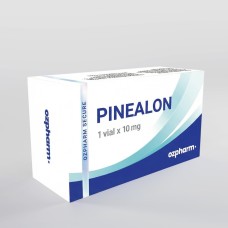
- Brand: Ozpharm
- Product Code: Ozph034
- Reward Points: 33
- Availability: In Stock
- Warehouse US Domestic 2
- $33.00
- Ex Tax: $33.00
- Price in reward points: 330
Tags: Pinealon 10mg by Ozpharm, Ozph034, Memory, Brain Health
Pinealon 10 mg by Ozpharm – Neuroprotective & Mitochondrial Research Peptide
Introduction
Pinealon is a synthetic tripeptide composed of Glu-Asp-Arg (EDR) that has been investigated for its potential role in cellular protection, oxidative-stress research, neuronal function, and age-related biological processes. Preclinical research has examined Pinealon's effects on reactive oxygen species, cell viability, and cellular signaling.
Product Details
Product Name: Pinealon 10 mg
Manufacturer: Ozpharm
Compound: Pinealon / EDR / Glu-Asp-Arg
Category: Research Peptide
Research Focus: Cellular protection, oxidative stress, neuronal and mitochondrial research
Format: 10 mg
Use: Research purposes only
Research Benefits and Properties
Scientific research on Pinealon has explored several biological properties, particularly in cellular and experimental models. Areas of investigation include:
Cellular protection research
Oxidative-stress research
Reactive oxygen species (ROS) research
Neuronal function research
Cell viability research
Research into cellular signaling
Hypoxia-related research
Mitochondrial and metabolic research
A published study reported that Pinealon reduced ROS accumulation and cell death in several experimental cell models exposed to oxidative stress. These findings are preclinical and should not be interpreted as proven clinical benefits in humans.
How Does Pinealon Work?
Pinealon is a short regulatory peptide consisting of three amino acids: glutamic acid, aspartic acid, and arginine. Experimental research suggests that its biological activity may involve cellular signaling and regulation of oxidative-stress responses.
Studies have investigated Pinealon's ability to influence reactive oxygen species, cellular survival, and pathways associated with neuronal protection. Research has also explored possible effects under hypoxic conditions.
Potential Research Applications
Pinealon has been investigated in several areas of biomedical research, including:
Neuroprotective research
Brain and neuronal research
Oxidative-stress research
Cellular aging research
Hypoxia research
Mitochondrial function research
Cellular viability research
Metabolic and cellular signaling research
Much of the available evidence comes from experimental and preclinical models, so further research is required to determine the relevance of these findings to human health.
Pinealon Combinations
Within research settings, Pinealon may be investigated alongside other compounds to explore complementary cellular and biological pathways. Research combinations may include:
Antioxidant compounds – investigation of oxidative-stress pathways
Mitochondrial-support compounds – research into cellular energy and mitochondrial function
Neuroprotective research compounds – comparative investigation of neuronal pathways
NAD+-related compounds – research into cellular metabolism and energy pathways
Other experimental peptides – investigation of complementary cellular signaling mechanisms
These combinations are research concepts only and should not be interpreted as recommendations for combining compounds for personal use.
Pinealon Cycle and Research Protocol
There is no universally established or approved Pinealon 10 mg consumer-use cycle.
Research protocols involving Pinealon may differ according to the experimental model, research objective, formulation, and study design. Published experimental studies should not be converted into personal dosing or self-administration instructions.
For research purposes, protocol selection should be determined by qualified researchers according to the applicable laboratory procedures and study requirements.
Possible Side Effects
The safety profile of Pinealon has not been established sufficiently to define a comprehensive human side-effect profile.
Because available evidence is largely based on experimental research, potential risks associated with personal use remain uncertain. Researchers should consider factors such as:
Possible local reactions associated with administration
Headache or dizziness
Gastrointestinal discomfort
Fatigue or changes in well-being
Allergic or hypersensitivity reactions
Unknown long-term effects
The absence of a well-established adverse-event profile should not be interpreted as proof that Pinealon is risk-free.
Important Safety Considerations
Pinealon is an experimental research peptide and should not be presented as an approved treatment for neurological, metabolic, aging-related, or other medical conditions.
Research findings involving cellular or animal models cannot automatically be translated into proven human benefits. Product purity, identity, stability, sterility, and quality should be independently verified when relevant to a legitimate scientific research protocol.
Storage
For research products, storage conditions should follow the manufacturer's product specifications, labeling, and applicable laboratory protocols.
Proper storage is important for maintaining peptide stability and product integrity. Avoid conditions that could cause degradation or contamination.
Pinealon and Cellular Research
Pinealon has attracted scientific interest because of its potential interaction with cellular processes involved in oxidative stress and cell survival. Research has reported effects on ROS accumulation and cell viability in experimental models.
Additional studies have investigated Pinealon in models of hypoxic stress, including potential effects on neuronal resistance to hypoxia and endogenous antioxidant systems.
Why Is Pinealon 10 mg Being Researched?
The interest in Pinealon comes from its short peptide structure and the biological effects observed in experimental research. Researchers are particularly interested in its potential relationship with oxidative stress, cellular viability, neuronal processes, and cellular adaptation to stressful conditions.
Although experimental findings are promising in certain models, the overall evidence base remains limited, and additional research is needed to establish the clinical significance of these observations.
Conclusion
Pinealon 10 mg by Ozpharm is a research peptide containing the synthetic tripeptide Glu-Asp-Arg (EDR). Research has investigated Pinealon in relation to oxidative stress, cellular viability, neuronal processes, and hypoxia-related mechanisms.
Its potential biological properties make Pinealon an interesting subject for laboratory research, but available evidence does not establish it as an approved medical treatment. It should therefore be regarded as a research compound rather than a therapeutic product.
Related Products
Pinealon 10mg by Ozpharm
$33.00 Ex Tax: $33.00