
ss-31-10mg-by-ozpharm
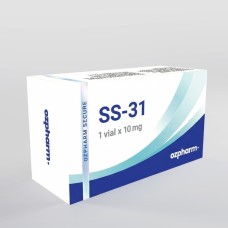
- Brand: Ozpharm
- Product Code: Ozph044
- Reward Points: 45
- Availability: In Stock
- Warehouse US Domestic 2
- $45.00
- Ex Tax: $45.00
- Price in reward points: 450
Tags: SS-31 10mg by Ozpharm, Ozph044, Anti-aging, Wound Healing
SS-31 10 mg by Ozpharm – Mitochondrial Research Peptide
Introduction
SS-31 10 mg by Ozpharm is a research-focused peptide product containing SS-31, also known as elamipretide or MTP-131. SS-31 is an investigational mitochondria-targeting tetrapeptide being studied for its potential effects on mitochondrial structure, cellular energy production, oxidative stress, and mitochondrial bioenergetics.
Unlike conventional peptides that primarily target receptors on the cell surface, SS-31 is designed to reach the inner mitochondrial membrane and interact with cardiolipin, an important phospholipid involved in mitochondrial membrane structure and function.
Elamipretide has been evaluated in clinical research involving mitochondrial disorders, cardiovascular conditions, muscle function, and other areas associated with mitochondrial dysfunction. Its clinical development remains investigational, and study outcomes have varied depending on the condition and endpoint being evaluated.
Product Details
Product Name: SS-31
Alternative Name: Elamipretide / MTP-131
Strength: 10 mg
Manufacturer: Ozpharm
Classification: Investigational mitochondrial-targeting peptide
Peptide Type: Synthetic tetrapeptide
Primary Research Target: Mitochondrial inner membrane and cardiolipin
Research Areas: Mitochondrial bioenergetics, oxidative stress, cellular energy production, muscle function, and mitochondrial dysfunction
SS-31 is a small, cell-permeable peptide designed to accumulate within mitochondria and interact with cardiolipin.
Research Benefits and Properties
SS-31 has attracted substantial scientific interest because of its mitochondria-targeting properties.
Key research areas include:
Mitochondrial function – SS-31 is being studied for its potential influence on mitochondrial structure and bioenergetic function.
ATP production research – Preclinical studies have investigated whether SS-31 can support mitochondrial ATP production.
Oxidative-stress research – The compound has been studied for its potential to reduce mitochondrial oxidative stress.
Cardiolipin interaction – SS-31 selectively interacts with cardiolipin within the inner mitochondrial membrane.
Cellular energy research – Researchers are investigating its potential effects on cellular energy availability and mitochondrial efficiency.
Muscle research – Elamipretide has been evaluated in studies involving mitochondrial myopathies and muscle function.
Mitochondrial membrane stability – Research suggests that SS-31 may influence mitochondrial membrane organization and protein interactions.
These are areas of scientific investigation and should not be interpreted as guaranteed benefits from an Ozpharm product.
How Does SS-31 Work?
SS-31 is a mitochondria-targeting tetrapeptide that can enter cells and localize to the inner mitochondrial membrane.
One of its key molecular interactions involves cardiolipin, a specialized phospholipid that plays an important role in maintaining mitochondrial membrane structure and supporting proteins involved in oxidative phosphorylation.
Research indicates that SS-31–cardiolipin interactions may influence mitochondrial membrane organization, protein assembly, membrane electrostatics, and mitochondrial bioenergetics.
This mechanism is particularly relevant to research into conditions in which mitochondrial dysfunction, impaired energy production, or oxidative stress may contribute to cellular damage.
Potential Research Applications
SS-31 has been investigated across several areas of mitochondrial and cellular research, including:
Mitochondrial dysfunction
Primary mitochondrial myopathy
Barth syndrome
Cardiovascular research
Skeletal muscle research
Cellular energy metabolism
Oxidative-stress research
Mitochondrial membrane function
Age-related mitochondrial changes
Neurobiological research
Cellular bioenergetics
Mitochondrial disease research
Clinical trials have evaluated elamipretide in conditions including Barth syndrome and primary mitochondrial myopathy. However, results have not been uniformly positive; for example, the MMPOWER-3 phase 3 trial did not demonstrate improvement in its primary 6-minute walk and fatigue endpoints despite generally favorable tolerability.
SS-31 Combinations
SS-31 is sometimes discussed in mitochondrial research alongside compounds or nutritional approaches associated with cellular energy and oxidative-stress pathways.
Potential research comparison areas include:
Coenzyme Q10 (CoQ10) – Studied for its role in mitochondrial electron transport and cellular energy metabolism.
NAD+-related research compounds – Investigated for their relationship with cellular redox balance and energy metabolism.
Antioxidant research compounds – Studied in connection with oxidative stress and mitochondrial protection.
Other mitochondrial-targeting compounds – Used in research to compare different approaches to mitochondrial dysfunction.
SS-31 should not be presented as a routine combination or “stack” with other compounds for self-directed human use. Research combinations should be evaluated according to the specific experimental design and applicable professional or institutional oversight.
SS-31 Cycle and Research Protocol
There is no established bodybuilding cycle or approved consumer-use cycle for SS-31 10 mg by Ozpharm.
Clinical research has used different administration schedules depending on the indication and study design. For example, clinical trials have evaluated elamipretide using controlled subcutaneous administration, while earlier studies also investigated intravenous administration and dose escalation.
These clinical-study protocols should not be converted into instructions for self-administration of a commercial research product.
For research purposes, SS-31 should be evaluated only under an appropriately designed research protocol and according to applicable regulatory and institutional requirements.
Possible Side Effects
Clinical studies of elamipretide have generally reported favorable tolerability, although adverse events have occurred.
Potentially reported effects include:
Injection-site pain
Redness at the injection site
Swelling or irritation
Headache
Dizziness
Nausea
Abdominal discomfort
Fatigue
Skin reactions or urticaria in some reports
Injection-site reactions have been among the most frequently reported adverse events in clinical studies, and many were described as mild.
Because SS-31 remains investigational, its complete long-term safety profile and safety across all potential uses have not been fully established.
Important Safety Considerations
SS-31 should be described as an investigational research peptide, not as an approved treatment for mitochondrial disease, aging, athletic performance, or other conditions.
Important considerations include:
Research status should be clearly disclosed.
Product identity, purity, potency, and sterility should not be assumed solely from online labeling.
SS-31 should not be combined with other compounds for self-directed medical use.
Clinical-trial results do not guarantee equivalent effects from a commercial research product.
Individuals with medical conditions should obtain appropriate medical advice.
Serious or unexpected adverse reactions require prompt medical evaluation.
Storage
Storage and handling should follow the manufacturer's current product documentation and label instructions.
Where manufacturer-specific stability information is unavailable, generic peptide-storage recommendations should not be treated as a substitute for validated product-specific handling requirements.
SS-31 and Mitochondrial Research
SS-31 is particularly interesting in mitochondrial research because it is designed to target the inner mitochondrial membrane rather than acting solely through conventional extracellular receptor pathways.
Research indicates that its interaction with cardiolipin may influence mitochondrial membrane organization and the function of proteins involved in energy production. Studies have also investigated its potential effects on ATP production, oxidative stress, and mitochondrial resilience.
This mitochondrial-targeting mechanism has made elamipretide one of the more extensively studied compounds in the field of mitochondria-focused peptide research.
Why Is SS-31 10 mg Being Researched?
Researchers are interested in SS-31 because mitochondrial dysfunction is associated with numerous biological processes involving cellular energy, oxidative stress, muscle function, and tissue maintenance.
Research questions surrounding SS-31 include:
How mitochondrial membrane structure can be supported
How cardiolipin interactions influence mitochondrial function
How mitochondrial ATP production may be affected
How oxidative stress influences mitochondrial health
How mitochondrial dysfunction contributes to muscle and cellular disorders
Whether mitochondria-targeting peptides can improve functional outcomes in specific diseases
Although preclinical and some early clinical findings have generated interest, clinical evidence remains indication-specific and does not establish SS-31 as a universally effective therapy.
Conclusion
SS-31 10 mg by Ozpharm can be described as an investigational mitochondria-targeting peptide associated with research into mitochondrial membrane function, cardiolipin interactions, cellular energy production, oxidative stress, and mitochondrial bioenergetics.
Also known as elamipretide or MTP-131, SS-31 has been studied in several clinical and preclinical research programs involving mitochondrial dysfunction and related conditions.
Its unique mitochondria-targeting mechanism makes it an important subject of ongoing scientific research, although clinical results have varied and SS-31 should not be presented as an approved treatment or as providing guaranteed therapeutic, anti-aging, or performance-enhancing benefits.
Related Products

SS-31 10 mg by Hilma Biocare
$114.00 Ex Tax: $114.00

SS-31 10mg by Ozpharm
$45.00 Ex Tax: $45.00