
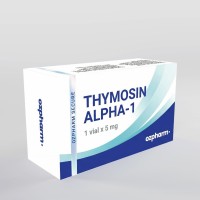
thymosin-alpha-1-by-ozpharm

- $45.00
- Ex Tax: $45.00
- Price in reward points: 450
Tags: Thymosin Alpha-1 by Ozpharm, Ozph050, Memory, Brain Health
Thymosin Alpha-1 10 mg by Ozpharm – Immune Modulation Research Peptide
Introduction
Thymosin Alpha-1 is a synthetic peptide derived from research into thymic peptides and is widely studied for its potential role in immune-system modulation. Also known as Thymalfasin or Tα1, it has been investigated for effects on T-cell function, dendritic-cell signaling, innate and adaptive immune responses, and cytokine activity.
Thymosin Alpha-1 10 mg by Ozpharm is intended for laboratory and scientific research involving immune regulation, cellular signaling, and host-defense mechanisms.
Product Details
Product Name: Thymosin Alpha-1 10 mg
Manufacturer: Ozpharm
Active Compound: Thymosin Alpha-1
Also Known As: Thymalfasin, Tα1
Peptide Class: Thymic-derived synthetic peptide
Research Category: Immune Modulation Research Peptide
Strength: 10 mg
Primary Research Areas: T-cell biology, immune modulation, cytokine signaling, dendritic-cell function, innate and adaptive immunity
Intended Use: Research purposes only
Thymosin Alpha-1 is a 28-amino-acid synthetic peptide that has been investigated extensively for its immunomodulatory properties.
Research Benefits and Properties
Research involving Thymosin Alpha-1 has examined several areas of immune biology:
Immune System Modulation: Investigated for its ability to influence multiple immune-cell populations.
T-Cell Research: Studied in relation to T-cell maturation, differentiation, and function.
Dendritic-Cell Signaling: Research indicates interactions with Toll-like receptor pathways in dendritic cells.
Cytokine Signaling: Studied for effects on immune-related cytokine production.
Innate Immunity: Investigated for interactions between innate immune recognition and cellular responses.
Adaptive Immunity: Research includes T-cell and antibody-mediated immune responses.
Natural Killer Cell Activity: Studied for potential effects on NK-cell function.
Vaccine Response Research: Investigated as an immune-response adjuvant in selected clinical settings.
Infectious-Disease Research: Examined in studies involving viral and bacterial infections.
Immune Homeostasis: Investigated for its potential role in balancing immune responses.
The scientific literature describes Thymosin Alpha-1 as a pleiotropic immunomodulator rather than a peptide acting through only one biological pathway.
How Does Thymosin Alpha-1 Work?
Thymosin Alpha-1 has been studied for its interaction with several components of the immune system. Research suggests that it can influence Toll-like receptor signaling, particularly in myeloid and plasmacytoid dendritic cells, which may subsequently affect immune-related signaling pathways and cytokine production.
Studies have also investigated its relationship with:
T-cell differentiation and maturation
T-cell activation
Dendritic-cell activity
Natural killer cell function
Th1-associated immune responses
Cytokine signaling
Innate immune recognition
Adaptive immune responses
Because immune signaling is highly dependent on disease state and biological context, the exact effects observed in research can vary between experimental models.
Potential Research Applications
Thymosin Alpha-1 has been investigated in a broad range of scientific areas, including:
T-cell differentiation research
T-cell function and immune activation
Dendritic-cell biology
Toll-like receptor signaling
Cytokine and chemokine research
Innate immune response studies
Adaptive immunity research
Natural killer cell activity
Vaccine-response research
Infectious-disease models
Immune suppression research
Immunosenescence and aging-related immune research
Cancer-immunology research
Host-pathogen interaction studies
Immune-system recovery research
Clinical and experimental literature has explored Thymosin Alpha-1 in conditions involving immune dysfunction, although results and clinical relevance vary substantially between indications and studies.
Thymosin Alpha-1 Combinations
Research has evaluated Thymosin Alpha-1 alongside other immune-modulating approaches, including:
Interferon-based research: Historically investigated particularly in viral-hepatitis research.
Vaccine-related research: Studied as an immune-response adjuvant in selected populations.
Antiviral research compounds: Investigated in infectious-disease models.
Cancer-immunology compounds: Studied as part of broader immune-response research.
Cytokine research systems: Used to investigate interactions between immune signaling pathways.
Innate-immunity compounds: Studied alongside pathways involving Toll-like receptors and dendritic cells.
Adaptive-immunity models: Used to investigate T-cell and antibody responses.
These combinations describe research concepts and published scientific investigation, not recommendations for combining compounds for personal use. Historical clinical research has examined Thymosin Alpha-1 in combination with interferon in hepatitis studies.
Thymosin Alpha-1 Cycle and Research Protocol
There is no universal consumer-use cycle for Thymosin Alpha-1 10 mg by Ozpharm.
Published clinical studies have used different schedules depending on the disease, study population, formulation, and research objective. For example, historical clinical research investigated repeated administration schedules in hepatitis and immune-reconstitution studies, demonstrating why research protocols should not automatically be converted into personal-use cycles.
For laboratory research, the appropriate experimental protocol depends on:
Study objective
Experimental model
Species and biological system
Research duration
Peptide concentration
Route used in the validated study protocol
Appropriate controls and endpoints
Thymosin Alpha-1 10 mg by Ozpharm should therefore be described as a research product rather than marketed with a standardized self-administration cycle.
Possible Side Effects
Clinical research has generally reported a relatively well-tolerated profile for Thymosin Alpha-1, although safety can vary according to the population, formulation, indication, and study design.
Reported or investigated adverse effects include:
Injection-site discomfort
Burning or itching at the injection site
Local irritation
Fever
Nausea
Flu-like symptoms
Fatigue or malaise
Headache
Immune or inflammatory changes
Potential hypersensitivity reactions
Injection-site discomfort has been among the commonly reported effects in earlier clinical literature.
More recent clinical research has also monitored serious adverse events in specific populations, demonstrating the importance of evaluating safety within the context of the particular study rather than assuming that results from one population apply universally.
Important Safety Considerations
Thymosin Alpha-1 has a substantial history of clinical investigation, but evidence does not mean that every commercially available product has been established as safe, effective, or equivalent to a clinically studied formulation.
Important considerations include:
Intended for scientific research unless specifically authorized for another use.
Do not assume that research findings apply to every commercial preparation.
Product purity, sterility, identity, aggregation, and storage conditions are important variables in peptide research.
Immune-modulating compounds can produce biological effects that depend on the experimental or clinical context.
Long-term use and repeated exposure require appropriate scientific evaluation.
Research protocols should be designed and supervised by qualified professionals.
Storage
Thymosin Alpha-1 should be stored according to the manufacturer's specifications and applicable laboratory handling procedures.
Appropriate storage considerations may include:
Protecting the product from unsuitable temperatures.
Minimizing exposure to excessive light and moisture.
Avoiding contamination.
Following validated laboratory reconstitution and handling procedures where applicable.
Maintaining appropriate storage conditions throughout the research period.
Always follow the specific product documentation supplied by the manufacturer or laboratory.
Thymosin Alpha-1 and Immune-System Research
Thymosin Alpha-1 is particularly interesting in immune research because it interacts with several components of both innate and adaptive immunity.
Research has investigated its effects on T cells, dendritic cells, Toll-like receptor signaling, cytokines, natural killer cells, and immune-response coordination.
Clinical studies have also explored its potential role in immune reconstitution and infectious-disease settings. For example, a randomized pilot study in hospitalized patients with COVID-19 investigated changes in CD4+ T-cell counts, while emphasizing that efficacy and safety data remained limited.
These findings make Thymosin Alpha-1 a useful subject for continued investigation into immune signaling and host-defense mechanisms.
Why Is Thymosin Alpha-1 10 mg Being Researched?
Researchers continue to investigate Thymosin Alpha-1 because of its broad biological activity and its potential to influence multiple immune pathways.
Key research interests include:
Immune modulation
T-cell differentiation and function
Dendritic-cell signaling
Toll-like receptor pathways
Cytokine regulation
Innate immunity
Adaptive immunity
Natural killer cell activity
Vaccine-response enhancement
Infectious-disease research
Immune suppression
Cancer-immunology research
Immune aging
Host-pathogen interactions
Immune-system homeostasis
Its multi-pathway activity makes Thymosin Alpha-1 an important subject for continued immunology and translational research.
Conclusion
Thymosin Alpha-1 10 mg by Ozpharm is a research peptide associated with extensive investigation into immune modulation, T-cell biology, dendritic-cell signaling, cytokine activity, and innate and adaptive immune responses.
Its scientific history includes preclinical studies and clinical investigations across several immune-related areas. However, findings can vary significantly according to the disease, study population, formulation, and research protocol.
Related Products
Thymosin Alpha-1 by Ozpharm
$45.00 Ex Tax: $45.00